Today in this article, we will embark on a general exploration of Ragusa’s map and the essential kit for your trip. In our journey to Ragusa, filled with history, fiction, nature, and food, we are eager to discover and completely immersed in curiosity, even though these places are somewhat familiar.
The first stop on this map of Ragusa is Chiaramonte Gulfi, a small village perched on the mountains. It’s one of those places you don’t expect much from, but it leaves you with a string of emotions and sensations. The main street in full medieval style leads to the Duomo, which tells its years of history and offers a panoramic view of the valley below, spreading out like a sea to an horizon of gentle hills, trees, and a multitude of colors. Here, a beautiful arch serves as the entrance to what was once the oldest center, where the beautiful Church of San Giovanni stands in excellent condition.
The beauty of Chiaramonte Gulfi is that from there you can admire Siracusa and its blue sea, with Mount Etna and a series of small towns that form pieces of a gigantic and picturesque puzzle of territories. It’s no wonder that this village is often referred to as the “Balcony of Sicily.”
Getting to Know Ragusa’s Map: Everything You Need to Know for Your Trip
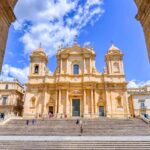
In discovering the many towns in the province of Ragusa, it is easy to realize the marvelous historical and artistic, as well as architectural, heritage. Just looking at the beauty of some monuments, like the Duomo of Ragusa with its spectacular inlaid rose windows, makes the visit more beautiful and interesting with every step.
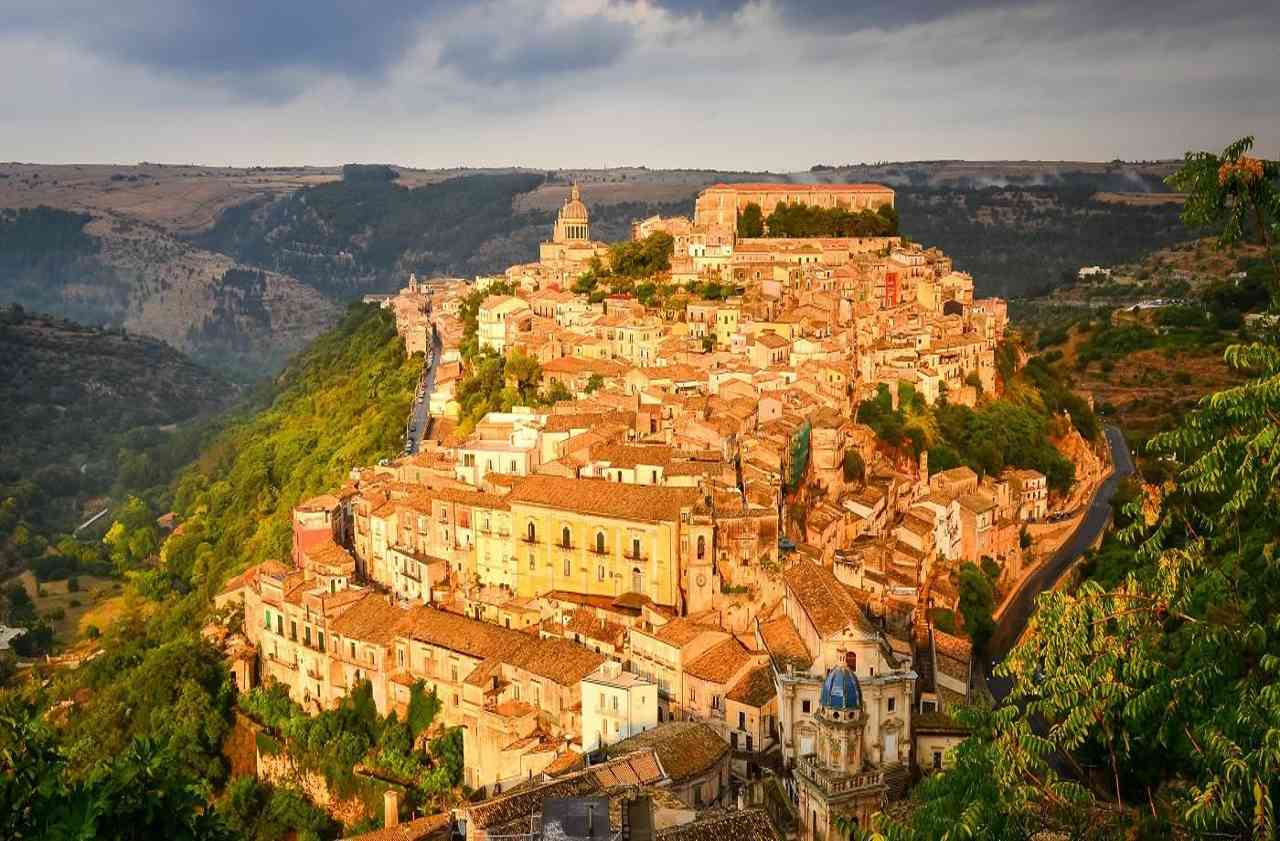
This includes Ragusa Ibla, which is the crown jewel of the city of Ragusa, distinguishing it from all other places. This part is entirely made up of houses perched on other houses, all resting together on an immense rock.
Curious to discover some fun facts about the beautiful city of Ragusa? What we know is that in 1693, two terrible earthquakes destroyed much of eastern Sicily, even causing a tsunami in the Strait of Messina. Some of the inhabitants decided to rebuild the city in the same place, while many others created a new Ragusa on the adjacent hill.
This latter area is what we now call Ragusa Superiore, while the historic city, which was rebuilt, is known as Ragusa Ibla. With that terrible earthquake, all the Gothic buildings and centuries-old relics were lost. However, thanks to this, today we have the opportunity to admire two cities entirely rebuilt in the style that was then in vogue: Baroque. Due to this intact testimony of Baroque architecture, Ragusa now boasts 16 monuments included in the UNESCO World Heritage list.