Do you fancy a vacation in Sicily, specifically in the Trapani area but you’re not sure what to visit and what to do in Trapani? Don’t worry, we’ll tell you everything you need to know. First of all, let’s start by saying that Trapani is often just a passing destination, for example for those who have chosen a vacation to the Egadi Islands or to the beautiful San Vito Lo Capo.
However, what many may not know is that Trapani is actually a small jewel that deserves much more than a quick stopover, and what we propose today is a sort of itinerary that requires 5 days, although for those with less time available, with a bit of effort it can also be done in 3 days.
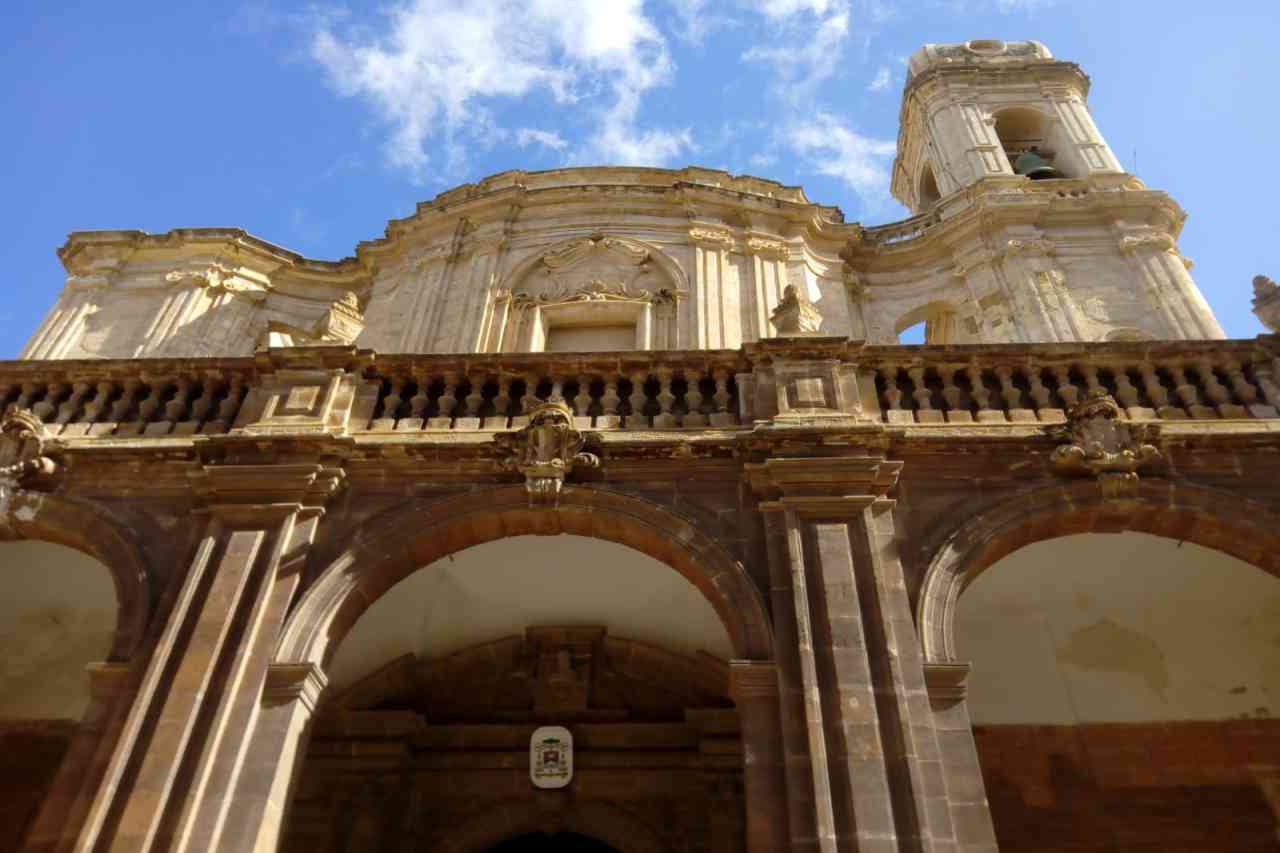
The historic center is undoubtedly a true marvel that plunges into the sea, the sole protagonist of the landscape. Here, a series of ancient palaces follow one another, telling the cultural and economic richness of Trapani, including the unmissable Senatorial Palace with the Clock Tower. Along this route, there are also dozens of churches, in one of which you can admire the marvelous Crucifixion by Van Dick.
From beautiful Trapani, with just a few minutes by cable car, you can easily reach Erice, one of the most beautiful villages in Italy, and with just a few minutes by car, you will find Custonaci with its sanctuary and the Mangiapane Cave. Last but not least, you absolutely must not miss a visit to the temples of Segesta and Selinunte, which are testimonies to the history and greatness of the entire Sicilian island.
5-day itinerary in Trapani: here’s what to see
Already above, we have shown you a brief guide on what to visit in Trapani, but now let’s go into a bit more detail to know some more curiosities. Have you ever noticed that, seen from above, the historic center of Trapani resembles a crescent moon suspended between two seas? Well, indeed, according to legend, it seems that Trapani was born from a sickle dropped from the hands of Ceres.
If you want to visit the oldest part of the historic center, you can start from the tip that stretches out into the sea where the Torre di Ligny is located, which was built in 1671 precisely to defend the city. This is the exact point where the Mediterranean and the Tyrrhenian Sea meet, and we see that the tower houses the Civic Anthropological Museum with artifacts from the Punic and Roman eras.
If, on the other hand, you are more interested in museums, then you can opt for the Pepoli Museum, which is located right next to the Church of the Santissima Annunziata. This museum undoubtedly deserves a visit because of the extraordinary beauty of the building that houses it, especially the magnificent staircase decorated with colored marbles that leads to the collections.
Here we have the opportunity to see a path divided into different collections including Renaissance sculpture, various paintings and applied arts, along with archaeology, Corals, Goldsmithing, and ceramics, to which is added a small section dedicated to the Memories of the Risorgimento.