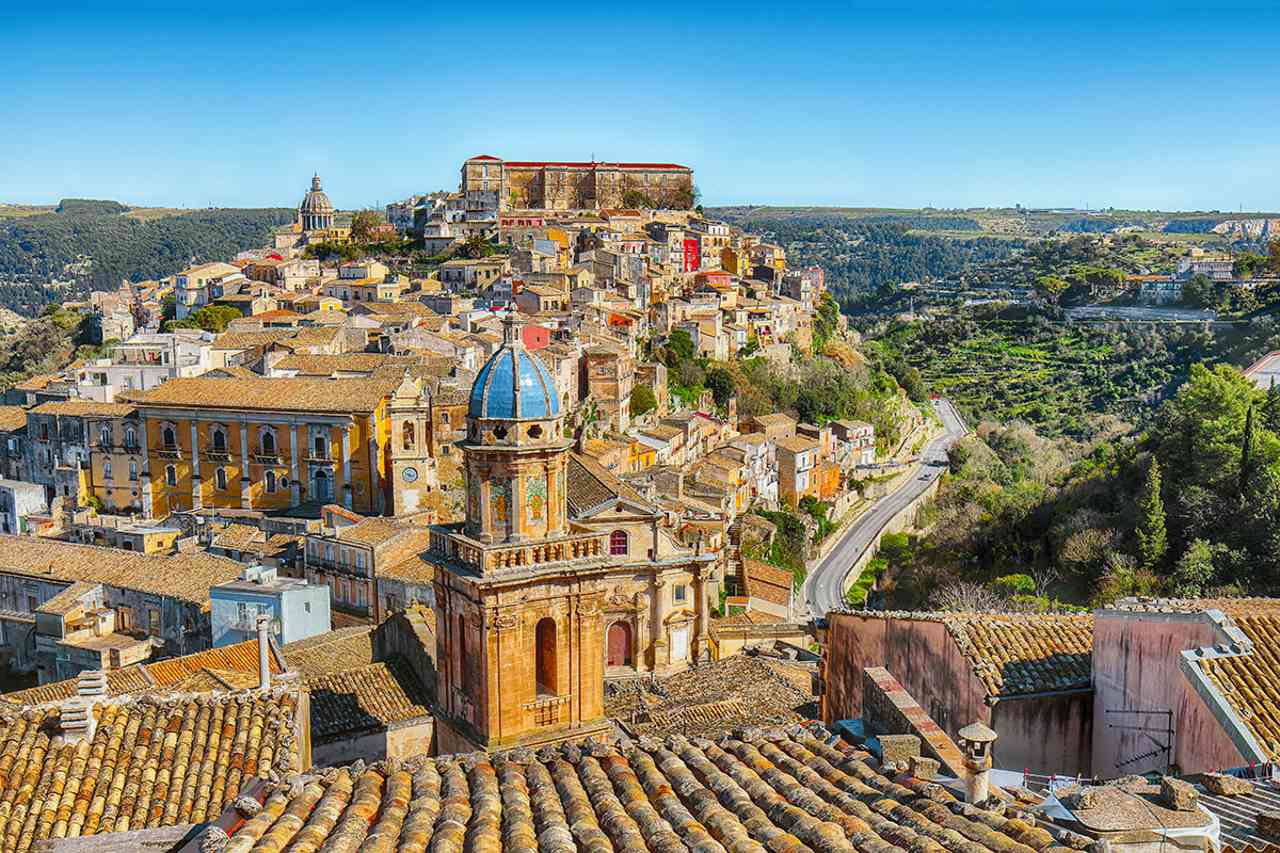
In this article, we will take a journey through the beautiful city of Ragusa, exploring its population and what its residents are called. Ragusa is the capital of the namesake free municipal consortium in the Sicilian region and is also known as the “city of bridges” due to the presence of three very picturesque structures of great historical value.
In 1693, a devastating earthquake caused almost total destruction of the entire city, claiming more than five thousand lives. The subsequent reconstruction in the 18th century divided the city into two large separate districts: Ragusa Superiore, situated on the plateau, and Ragusa Ibla, which rose from the ruins of the ancient city and was rebuilt according to its medieval layout.
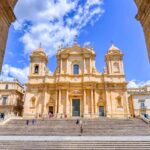
The architectural masterpieces built after the earthquake, along with those in the Val di Noto, were declared UNESCO World Heritage Sites in 2002. It is well known that Ragusa is one of the most important places due to its baroque art, such as its churches and 18th-century palaces.
Speaking of the climate of this beautiful city, it enjoys a Mediterranean hill climate: its altitude results in average temperatures that are cooler than those on the Sicilian coast. Snow events are rare in the lower areas of the city like Ibla but occur more frequently in the higher areas on the plateau, which have a Mediterranean mountain climate.
Winter in Ragusa is very rainy, especially between October and March. Along with Messina, Ragusa is one of the rainiest provincial capitals, with an annual average of about 700 mm. However, the most significant precipitation occurs during the more persistent winter levant storms, which can bring up to 200 mm of rain in a single day across the Iblean region.
How many inhabitants does Ragusa have and what are they called?
Now let’s focus a bit on the origin of the name “Ragusa,” which dates back to the Byzantine era, meaning granary, due to the area’s agricultural richness. During the Arab rule, the name became Ragus or Rakkusa, which in Arabic means “a place famous for a surprising event,” likely referring to a battle. In the Norman and Aragonese periods, it was Latinized to Ragusia, and then simply became Ragusa towards the end of the 18th century.
According to Filippo Garofalo, the etymology of Ragusa comes from the transformation of the Greek Heraea to Heresium, then to Reusia and Rakkusa under the Arabs, and finally to Ragusa. The name Heraea in turn would come from a presumed identification of the settlement with the ancient Greek colony of Hybla Heraia, whose actual location has never been confirmed.
Now, getting to the core of the article, the inhabitants of Ragusa number 69,820 and are simply called “ragusani.” Additionally, the municipality of Ragusa has an area of 442 km² and is located in the province of Ragusa.