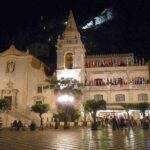
Are you thinking of planning your vacation and considering a trip to Favignana? Perfect, you’ve come to the right place because today, in this article, we’ll talk about Cala Bue Marino in Favignana and much more about the island. Favignana (called Faugnana in Sicilian) is an Italian island that belongs to the Egadi Archipelago in beautiful Sicily.
The main island of the Egadi Archipelago, Favignana, is located about 7 km from the western coast of Sicily, between the cities of Trapani and Marsala. The island’s name comes from the Latin word favonius (meaning “favonio”), a term the Romans used to describe the warm westerly wind.
The village is centered around a natural inlet where the port is located, and along its shores are the ancient Florio tuna factories. The island’s traditional Mediterranean architecture, featuring white plaster and blue or green windows, has been rediscovered and greatly valued in recent years. The landscape is protected by the cultural heritage authority.
The island is predominantly covered by Mediterranean scrub, consisting of shrubland and maritime pine forests, which has helped establish it as a significant tourist destination.
As for the most popular seaside spots on Favignana, we can mention Praia Beach, Cala Azzurra, Cala Rossa, Bue Marino (the cliff we will discuss below), Cala Grande, and Ritunna, among others.
Where is Bue Marino in Favignana? Here’s All the Information
Getting straight to the point, let’s talk about Cala Bue Marino in Favignana. The eastern tip of the island features a coast just a few meters high, making access to the sea quite difficult. The most convenient spot is Bue Marino, which is a descent to the sea amid old tuff quarries, with dark blue waters marked by some azure patches.
Cala Bue Marino is one of the most fascinating beaches, named after the typical calcarenite quarries that used to be there. In the waters in front of the cove, boats called schifazze were moored to load the freshly extracted blocks. But how do you get there?
The cove is just 5 km from the center of Favignana. To reach it, you need to follow the signs to Cala Rossa and then continue to Bue Marino. The last part of the route is an unpaved road, and the seabed at this point is deep with strong currents. For this reason, the beach is not particularly suitable for children or the elderly.
An interesting fact about this cove is that its name “Bue Marino” indicates that seals, specifically the monk seal species, once lived there. This species is now endangered, with only about 700 individuals remaining. Since 2010, monk seals have been spotted both in Marettimo, in the Grotta del Cammello, and in a cave in Favignana.